Microsoft
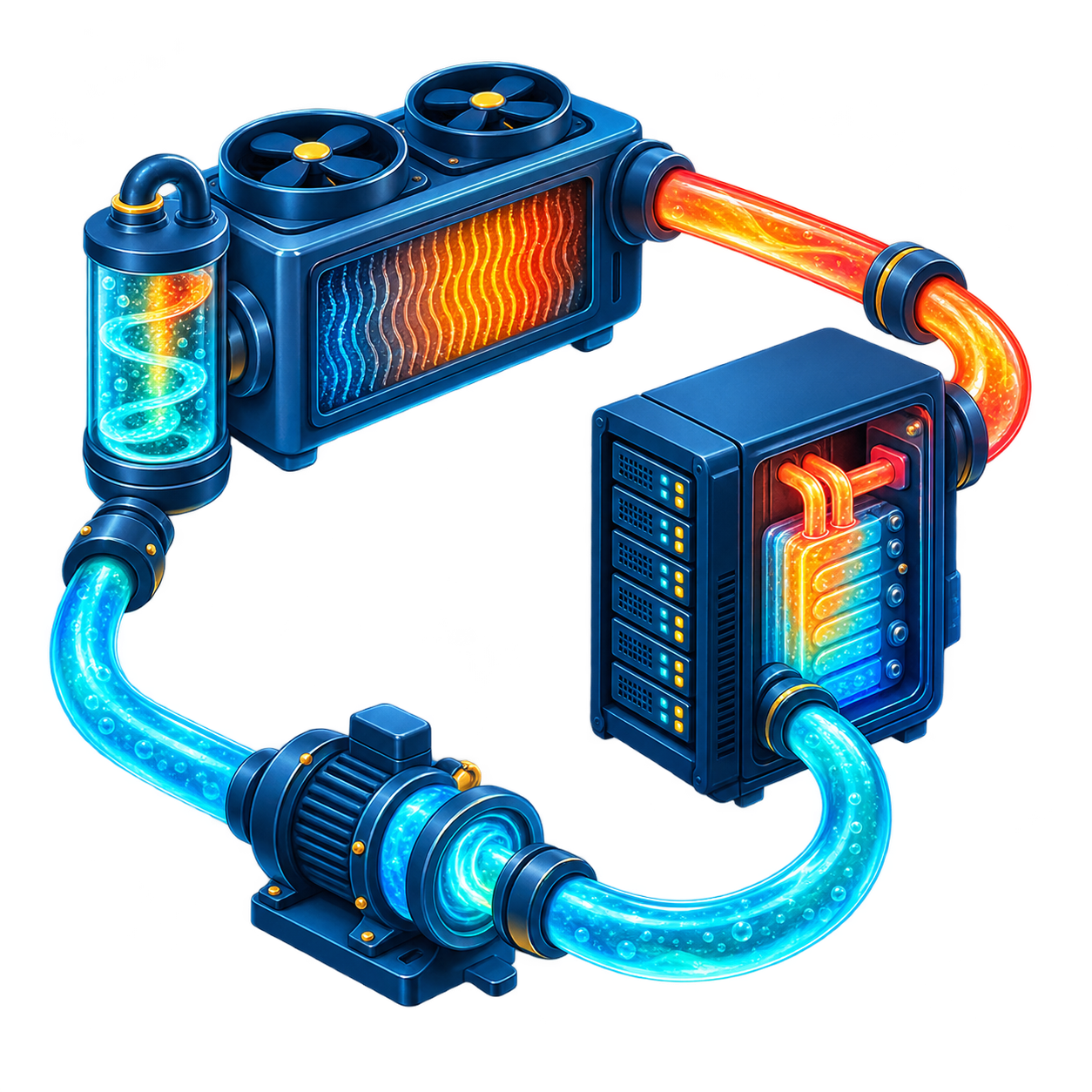
Use closed-loop cooling, expand reclaimed-water systems, and replenish water in the watersheds where facilities operate.
AI depends on physical infrastructure. Follow water through chip manufacturing, electricity generation, and data-center cooling—then see what companies can measure, reduce, and disclose.
Play the water quiz

Water enters the system before a server answers a question: manufacturing creates chips, power plants generate electricity, and data centers manage heat.
Annual electricity used by AI servers grew from under 2 TWh in 2017 to over 40 TWh in 2023.
| Category | Value |
|---|---|
| 2017 | Under 2 TWh |
| 2023 | Over 40 TWh |
Global data-center water use was about 560 billion liters in 2023 and is projected to reach about 1.2 trillion liters in 2030.
| Category | Value |
|---|---|
| 2023 | 560 billion liters |
| 2030 | 1.2 trillion liters |
Roughly two-thirds of data-center water use is connected to electricity and energy, one-quarter happens through on-site cooling, and the remainder comes from semiconductor manufacturing.
| Category | Value |
|---|---|
| Electricity and energy | Roughly two-thirds |
| On-site cooling | About one-quarter |
| Semiconductor manufacturing | The remainder |
In 2023, U.S. data centers used 66 billion liters on site and nearly 800 billion liters through the electricity that powered them.
| Category | Value |
|---|---|
| On site | 66 billion liters |
| Electricity generation | Nearly 800 billion liters |
Companies report facility or fleet totals, but they generally do not separate the water used for AI workloads from other computing. Without workload-level reporting, an exact AI share cannot be verified.
Better cooling, cleaner water inputs, careful siting, and watershed work can reduce pressure. Each action still needs a clear place, timeframe, and measured result.
Use closed-loop cooling, expand reclaimed-water systems, and replenish water in the watersheds where facilities operate.
Improve cooling efficiency, use alternatives to drinking water where appropriate, and support watershed replenishment projects.
Track water-use efficiency, expand reclaimed-water cooling, and invest in community water and watershed projects.
Design efficient cooling systems, reduce operational water intensity, and restore water through local watershed projects.
Elon Musk is betting on orbital AI data centers powered by near-constant solar energy. In space, servers would reject heat through radiators instead of terrestrial cooling systems.
A useful public record should make each facility understandable on its own and connect efficiency claims to local water conditions.